
Home Blog Page 459

Samsung launched the new Galaxy A05s featuring 50MP triple cameras & SD680 SoC in India.

In India, Samsung has launched a new Galaxy A-series phone. With incremental upgrades, the Galaxy A05s follows the Galaxy A04s. Globally, the Galaxy A05s has already been released. The product falls under the Rs 15,000 price segment.

Galaxy A05s:

The new Galaxy A05s sports a 6.7-inch FHD+ Infinity-V PLS LCD display with a 90Hz refresh rate. It also comes with Corning Gorilla Glass on top. The new Galaxy A05s is powered by an SD680 SoC 2.0 GHz Octa-Core processor coupled with 6GB RAM & 128GB internal storage. It is available in Silver, Light Green, and Black colors.

On the back, the Galaxy A05s features triple rear cameras with a 50MP main sensor having an aperture of f/1.8 and a dual 2MP depth plus macro sensor with an aperture of f/2.4 and LED flash. There is a 13MP selfie shooter with an aperture of f/2.2.

All this is packed with a larger 5000 mAh battery and comes with 25W fast charging support. The new Galaxy A05s runs on Android 13 with One UI 5.1 Core on top. The device also keeps a 3.5 mm jack, USB Type-C port, FM Radio, Bluetooth 5.1, Wi-Fi, A-GPS, and GLONASS, and also has a side-mounted fingerprint scanner.

Pricing:

This Samsung Galaxy A05s is available in Black, Light Green, and Light Violet colors and costs Rs. 14,999. It can be purchased online and in authorized Samsung stores. By using the SBI Bank Credit Card EMI option, buyers can receive an instant discount of Rs. 1000.

Vivo X100 & Vivo X100 Pro key specs along with launch details leaked online.

According to numerous reports, Vivo will launch its X100 series of photography-focused flagship smartphones in China around mid-November. A tipster has revealed a possible X100 launch date on Weibo. Additionally, another leak has revealed details about the X100 Pro’s camera, battery, and charging capabilities.

It is expected that MediaTek will unveil the Dimensity 9300 on Nov. 6. In addition, the X100 series could launch between November 13 and 15, according to the same source. According to recent reports, the D9300-powered X100 series will perform similarly to Apple’s iPhone 15 Pro.

The Vivo X100 will feature a Sony IMX920 primary camera, according to tipster Digital Chat Station. It will be powered by a 5,100mAh battery and support 120W wired charging. It is likely that the X100 will not support wireless charging, just as the X90 does.

Vivo X100 Pro is said to feature Sony IMX989 as its primary camera. There will be a 5,400mAh battery inside the device that supports wired charging of 100W and wireless charging of 50W.

There have been reports that the X100 and 100 Pro will feature an IMX663 ultra-wide lens and a 64-megapixel periscope zoom camera. In December 2022, Vivo unveiled the Vivo X90 Pro Plus along with the X90 and X90 Pro. The X100 Pro+ is expected to be announced in the first quarter of 2024, according to a number of reports.

OnePlus 12 will sport an much better AMOLED display than Samsung’s.

The OnePlus Open is set to launch in global markets tomorrow, the company’s first-ever foldable phone. OnePlus is also reportedly working on its next-generation flagship smartphone, the OnePlus 12. By the end of this year, it should be available. It appeared in updated leaked renders last month. The OnePlus 12’s key specifications have been shared by renowned tipster Digital Chat Station.

OnePlus 12’s high-end customized screen is codenamed ‘Dongfang’, according to DCS. According to the leaked renders, the display will have a 2K resolution and curved edges. According to the tipster, OnePlus’ upcoming flagship’s display will be better than Samsung’s AMOLED. With its premium color, brightness, and eye protection, the OnePlus 12 will be the best screen on the market. There are also rumors that the device will have many exclusive technologies, but those remain unknown at the moment.

OnePlus 12:

Digital Chat Station, a popular tipster, recently revealed some details about the OnePlus 12 series’ engineering prototype. The leakster claims to have seen the flagship engineering model in production.

On the front of the device is a centered single-hole curved screen, and on the back is a large circular camera module with a metallic scale ring. In addition to substantial main and periscope lenses, the design includes a quad-camera system covering a variety of focal lengths.

Additionally, the prototype features a metal middle frame and a super-thin optical fingerprint scanner. Furthermore, the device has a large X-axis motor and an efficient heat dissipation area, which keeps it cool during intense use.

Specs:

OnePlus’ upcoming phone will feature a 2K curved OLED screen with a 120Hz refresh rate developed using a new domestic substrate. Snapdragon 8 Gen 3 will be used in the device and two RAM options are available: 16GB and 24GB.

OnePlus 12’s rear camera setup will include a 50MP IMX9xx main sensor, a 50MP ultra-wide lens, and a 64MP 3X periscope telephoto lens. The tipster had previously confirmed that Sony IMX9xx sensors would be used in the camera system, reinforcing its authenticity.

There is a 5400mAh battery inside the phone, which supports 100W wired fast charging. Wireless fast charging is also supported by the device, which promises 50W of power.

Here is the first look at the new Xiaomi’s HyperOS comes with some new features.

MIUI will be replaced by HyperOS, a new operating system from Xiaomi. Xiaomi, Redmi, and Poco devices run MIUI, which has seen 14 iterations to date. Apple’s iOS is known for its heavy customizations and overall look. With the Xiaomi 14 series, MIUI will be replaced by HyperOS, the company’s new operating system. There are some nitty-gritty details revealed in some leaked screenshots of the upcoming OS while we wait.

Xiaomi HyperOS will offer significantly more customization options for the lock screen, according to screenshots shared on Weibo. With the new update, users will have access to new templates, clocks, fonts, and widgets, as well as more detailed wallpaper customization options. Although the app icons remain the same, the control center on the new software appears to be more streamlined than MIUI 14.

Xiaomi HyperOS screenshots circulating online are likely from a beta version of the operating system that is still under testing. We shouldn’t assume that this is what the new OS will look like in its stable release. It is possible that Xiaomi will make changes to its operating system before it is released.

In China, the new Xiaomi 14 series is rumored to debut on October 27 with HyperOS. According to Xiaomi’s global VP, the new OS will be rolled out globally throughout 2024. HyperOS will gradually replace MIUI, which has been around for 13 years. A year before Xiaomi launched its first smartphone, the first MIUI ROM was released back in 2010.

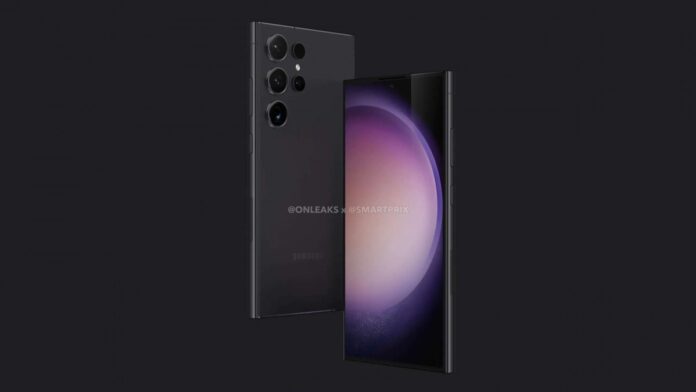
Samsung Galaxy S24 series to arrive in four different color options details leaked.

We are getting closer to Samsung’s rumored Galaxy S24 launch timeframe, and more details are being revealed about Samsung’s upcoming flagship smartphone lineup. Several sources have claimed that Galaxy S24 phones have brighter screens in recent days. A report today claims to know the colors of the Galaxy S24.

Samsung’s Galaxy S24, Galaxy S24+, and Galaxy S24 Ultra will be available in the following colors: Black, Gray, Violet, and Yellow, according to Ross Young, CEO of DSCC (Display Supply Chain Consultants).

For years, Samsung has stuck with shades of Black and Gray, but Violet and Yellow are interesting color choices. It was the Galaxy S10e, whose signature color was Canary Yellow, that Samsung launched its high-end Galaxy S series phone in yellow the last time. During the launch of the Galaxy S21 series, which included both the Galaxy S21 and Galaxy S21+ in Phantom Violet, the South Korean firm last used the violet color.

Those who like brighter colors than Black, Gray, and White may enjoy the Galaxy S24 series. Until we see more credible information, we need to take Young’s remarks with a pinch of salt. He has generally been correct with his claims in the past.

Xiaomi announces new HyperOS an replacement to popular MIUI will be rolling out globally.

A new operating system, HyperOS, is being launched by Xiaomi, the Chinese smartphone maker. Xiaomi’s upcoming 14-series phones will use the new OS, which will eventually replace MIUI, Xiaomi’s current Android-based software.

In a tweet today, Xiaomi’s founder and CEO Lei Jun confirmed the development of HyperOS. The new OS will debut on the Xiaomi 14 series, which he said is a “historic moment” for Xiaomi.

The HyperOS rollout will take place throughout 2024, according to Alvin, Xiaomi’s global VP. The new OS will gradually replace Xiaomi’s 13-year-old MIUI operating system.

According to reports, HyperOS has been in development since 2017 and is designed for Xiaomi’s wide range of products, including smartphones, smart home devices, and cars. Using the new OS, users will be able to control and manage all their devices from one location, according to the company.

On Weibo, Li Jun clarified that HyperOS is a hybrid OS combining Android with Vela, completely rewriting the underlying architecture, and preparing a public platform for the Internet of Everything that will support tens of billions of devices and billions of connections in the future. Based on NuttX, an open-source embedded operating system, Xiaomi Vela is an IoT software system.

Samsung might launch premium smartwatch Galaxy Watch Ultra with new Micro LED display.

Micro LED display technology is launching in TVs globally this year, and the Korean giant intends to use it in smartwatches and other smaller devices. As a result of breaking past limitations, Micro LED TVs will now be able to display ultra-large images. Samsung will produce consumer electronics with 76-inch, 89-inch, 101-inch, and 114-inch display sizes.

In an effort to commercialize Micro LED, Samsung intends to replace its Galaxy Watch’s OLED within a year. Late last year, Samsung created a Micro LED team to develop micro LED displays for smartwatches. The display’s actual journey on small consumer electronics gadgets will begin within a year of development and then the Research and Development stage.

It uses LEDs with a diameter of less than 100㎛ (micrometers). Unlike traditional backlights and color filters, it emits light without a backlight. Micro LEDs made by Samsung are smaller than 50㎛ and their RCG elements are made of inorganic elements that eliminate burn issues and maintain quality over 100000 hours. While emitting light at maximum brightness, these displays feature a high contrast ratio.

It has been rumored that the Giant is working on a “Galaxy Watch Ultra” that will feature the new Micro LED display. Compared to the current Galaxy Watch models, the new watch will have a better display and enhanced features.

We expect Micro LEDs to be used in smartphones and other smart devices in the near future, resulting in better brightness. A new display, however, will cost the user significantly more.

Apple’s much awaited iPad Mini 7 will come with these four upgrades for sure.

There are rumors that the next-generation iPad Mini will be released in late 2023 or early 2024, bringing with it several upgrades over the current model.

It is rumored that the next-generation iPad Mini will use the same A16 Bionic chip as the iPhone 14 Pro and iPhone 14 Pro Max. The A17 Bionic chip in the current iPad Mini would be a modest upgrade, but it would still make the tablet one of the most powerful ever.

It is also rumored that the next-gen iPad Mini will feature upgraded front and rear cameras. Apple may also add new software features, such as the Photonic Engine for improved low-light performance and ProRes video recording and Audio Zoom, but we’re not sure what improvements to expect in the camera department.

It is also expected that Apple will introduce new color options for the iPad Mini. Currently, the device comes in Space Gray, Starlight, Pink, and Purple, so it’s possible Apple will keep some of these colors and swap one or two out for new choices, or it could overhaul the entire line.

In the iPad Mini 7, Apple is rumored to rotate the screen assembly to reduce jelly scrolling, which causes screen tearing with the current model. When the iPad Mini is in portrait orientation, jelly scrolling is most noticeable, but the rumored screen rotation should minimize it.

Apple quietly announces the cheaper Apple Pencil with USB Type-C port in India.

Apple introduced its third-generation Apple Pencil today. The pencil is more affordable than the second-generation model. As compared to the previous model, this version has fewer features. While the new accessory is a great value, it is definitely not ideal for creative professionals who need to take notes, journal, etc. As a result, it sits between the original first-generation and second-generation offerings.

As with the previous Apple Pencils, the new model features a matte finish and a flat side that can be attached magnetically to the iPad side. The accessory lacks wireless charging and instead goes into sleep mode to preserve battery life. It measures 7.5 x 155mm and weighs 20.5 grams.

It offers pixel-perfect accuracy, low latency, and tilt sensitivity. On iPad Pro models, the hover feature is supported. Unlike the 2nd generation pencil, the latest version does not include pressure sensitivity, wireless pairing, and charging, or double-tap functionality.

Apple has added a USB-C charging port to the new Pencil through a sliding cap. iPads with USB-C ports can also use the accessory. Among these are the third- to sixth-generation iPad Pro 12.9, first- to fourth-generation iPad Pro 11, fourth- and fifth-generation iPad Air, tenth-generation iPad, and sixth-generation iPad Mini.

It costs $79 ($69 for education), €95, or Rs 7,900. Beginning in early November, it will be available for purchase.

Samsung Galaxy S24 series display details leaked, all three will come with LTPO AMOLED display.

According to a new report from a reputable source of Samsung-related leaks, Samsung will bring the Galaxy S24, S24+, and 24 Ultra closer together in terms of display. Korean tech giant Samsung appears to be incorporating its new technology into all three models, not just the Ultra, as had been the norm in the past.

All three models will feature LTPO, M13 displays with 2,500 nits of peak brightness, according to X (formerly Twitter). Until now, only Ultra members could reach higher brightness with LTPO panels.

It will only differ in the display resolution and, of course, the size of the Galaxy S24. Variable refresh rate will now be available on non-Ultra models, but the 2,500 nits peak brightness likely refers to the panels’ ability to boost brightness when playing HDR content. Nevertheless, that’s an impressive value.

It makes a lot of sense to offer the best of what Samsung has to offer with the Galaxy S24 and S24+, which are still considered flagship phones.

Galaxy S24+ Geekbench:

Samsung is expected to launch the Galaxy S24 and Galaxy S24+ with the Exynos 2400 chipset, according to recent rumors. On GeekBench, the Galaxy S24+ shows performance upgrades. According to the popular benchmarking platform, this device uses the Snapdragon 8 Gen 2 processor.

According to GeekBench 6, the upcoming Galaxy S24+ model with Qualcomm’s new flagship chipset scored 17,031 points in the Vulkan test. In comparison to the 2023 flagship Galaxy S23 Ultra, which is powered by Snapdragon 8 Gen 2, this represents an 81.6 percent performance boost. This smartphone chipset appears to perform on par with the desktop-grade Nvidia GeForce GTX 1050, according to the benchmark listing.

It is important to note that these are only synthetic benchmarks, not actual performance. Additionally, the GeekBench sighting provides very limited information about the Galaxy S24+.

4,765FansLike
753FollowersFollow
3,066FollowersFollow
206FollowersFollow