
Home Blog Page 456

Apple to bring AI features with iOS 18, Siri & Messaging app might get major upgrades.

Apple is working on ways to integrate Artificial Intelligence (AI) into its next iOS version next year in an effort to keep up with the AI trend.

Apple is trying to integrate AI into as many apps as possible, Bloomberg’s Mark Gurman wrote last week in his Power On newsletter. The technology could also be incorporated into Apple’s upcoming iOS 18 version, which could launch next fall.

Apple released the iOS 17 operating system (OS) last month for eligible devices. As rivals Microsoft and Google have already implemented AI into several of their products, Apple analyst Gurman considers AI to be a “pretty big miss internally.”

AI features on various apps:

It seems likely that iOS 18 will feature some significant AI-based changes based on the latest information. Gurman estimates that Apple will spend close to $1 billion (Rs 8300 crore) per year on generative AI.

Bloomberg reports that “the new features should improve Siri’s abilities to field questions and auto-complete sentences, mirroring recent changes to competing services.”

As a result, Siri and the Messages app will be able to improve AI capabilities by using the large language model (LLM).

Apple will implement AI features using both on-device and cloud-based setup approaches, according to Gurman. “Deploying Apple’s LLMs via the cloud allows for more advanced operations than an on-device approach,” the report said.

According to him, generative AI will be deeply integrated into the company’s Siri voice assistant. The analyst expressed concerns about Apple’s timely integration of AI features across its product line, even though Apple will debut a completely revamped Siri next year.

Xcode, the company’s integrated development environment for macOS, is also described as integrating AI. Developers can use it to create software that runs on macOS, iOS, iPadOS, watchOS, tvOS, and visionOS. Application development will be boosted by AI features.

Apple Music also has an auto-generated playlist feature. Various auto features could also be incorporated into Apple’s Pages and Keynote apps using generative AI.

Oppo confirms the launch of next flagship Oppo Find X7 series, key specs revealed.

Snapdragon Sumit is Qualcomm’s annual event in which chipsets for various devices are announced. Among them are the Snapdragon 8 Gen 3 smartphone processor, the Snapdragon X Elite laptop processor, and the Snapdragon S7 Pro audio processor. Following Qualcomm’s announcement, a number of smartphone brands revealed plans to launch devices with the Snapdragon 8 Gen 3 chipset on microblogging platforms. Among them are iQOO, Redmi, OnePlus, and others.

Now, OPPO announced its plans to launch a Snapdragon 8 Gen 3-powered smartphone. The company shared the news on the microblogging platform Weibo. The next generation of the Find X series will be equipped with Qualcomm chipsets. The Find X7 series is expected to launch, but the exact launch date is unknown. In addition, it remains to be seen which model will be powered by the Snapdragon 8 Gen 3.

Thus, Qualcomm’s latest chipset may be available only in the upcoming Find X7 Pro model. There is a possibility that Find X7 will be equipped with a MediaTek SoC. Dimensity 9300 with 16GB RAM was revealed on Geekbench.

The OPPO Find X7 Pro is expected to support 100W wired charging and 50W wireless charging. The display will reportedly be 2K curved.

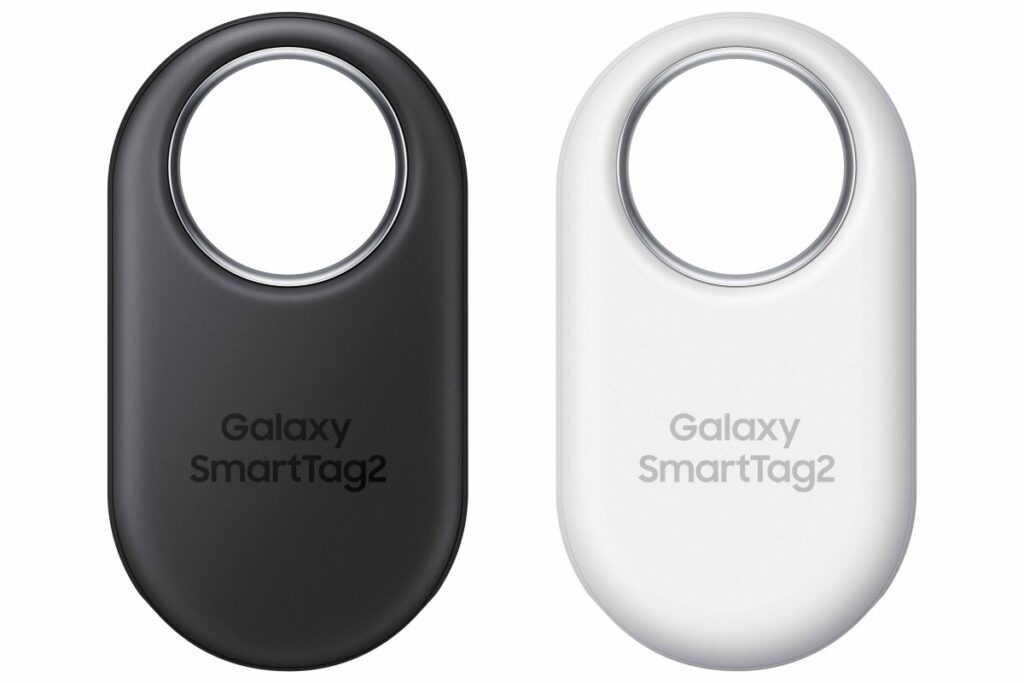
Samsung quietly launched the new Galaxy SmartTag2 in India, features 700 days of battery life.

Samsung has now brought the Galaxy SmartTag 2 item tracker to the Indian market, after launching it in the global market earlier this month. A revamped Compass View has been added to the SmartTag 2 over its predecessor. This feature displays directional arrows that indicate the location and distance of your SmartTag 2. Any Galaxy smartphone with UWB support can be paired seamlessly with it.

Specs:

The Samsung Galaxy SmartTag2 device has been updated with a new design, a longer battery life, and a variety of new features to follow its Galaxy Fan Edition devices. There is now a metal ring inside the design, allowing it to be used for more purposes.

The Galaxy SmartTag2 features a new feature called Lost Mode. Galaxy SmartTag2 owners can enter their contact information, and when the tag is lost, the finder can scan it using NFC on their phone and it will automatically show the owner’s contact information.

Your belongings are easier to find with the Compass View, which points to the exact location of the Galaxy SmartTag2. Only UWB-enabled devices, such as the Galaxy S Ultra series, can use this feature.

Using the Power Saving Mode, the battery life can last for 700 days, twice as long as the previous SmartTag generation. Using Normal mode, it can last for 500 days, which is again 50% longer than the previous generation. According to Samsung, Power Saving Mode is most useful for people who track belongings with the device.

A full-screen map view and a refreshed interface have been added to the SmartThings Find app along with the Galaxy SmartTag2 release. If you use the same Samsung account as your old Galaxy phone, SmartTag2 will automatically sync with your new Galaxy phone.

By leveraging Bluetooth LE, UWB, and Augmented Reality, the app allows you to locate your Samsung Galaxy SmartTag2 devices using your phone’s camera.

Your privacy was also protected by Samsung. SmartThings Find app will send you “Unknown tag alerts” if someone has planted the tracking device on you, such as when an unknown SmartTag device follows you. SmartTags are protected this way to prevent abuse.

Pricing:

Samsung Galaxy SmartTag2 costs Rs. 2,799 and is available in black and white colors.

Qualcomm announces the new Snapdragon 8 Gen 3 SoC with AI support & 30% performance boost.

Qualcomm announced Snapdragon 8 Gen 3 at the Snapdragon Summit 2023, the successor to the well-received Snapdragon 8 Gen 2. In both performance and efficiency, Qualcomm had a massive success last year. What are the new features of Snapdragon 8 Gen 3?

Specs:

This year’s Snapdragon 8 Gen 3 is all about on-device AI, but we’ll get to that later. The first thing we need to discuss is its architecture. Based on TSMC’s 4nm process node, the 8 Gen 3 has an octa-core CPU cluster. Instead of using Nuvia cores that are available on the Snapdragon X Elite, it’s still using Kryo cores.

Snapdragon 8 Gen 3 comes with a single Cortex-X4 prime core clocked at 3.3GHz, three Cortex-A720 cores clocked at 3.2GHz, two Cortex-A720 cores clocked at 3.0GHz, and two Cortex-A520 cores clocked at 2.3GHz. The core setup is basically 1+(3+2)+2 with the Cortex-A720 core clocked at two different speeds. A total of 12MB of L3 cache is available.

GPU:

Qualcomm claims that the Snapdragon 8 Gen 3 has seen a 30% performance improvement over the Snapdragon 8 Gen 2 due to the newer ARM cores. With this, Qualcomm has stopped supporting 32-bit architectures. Qualcomm uses the best Adreno GPU on the Snapdragon 8 Gen 3, which is 25% faster than the Adreno 740 on last year’s SD8Gen2.

In addition, the new Adreno GPU still offers 25% greater power efficiency than the Adreno 740. Furthermore, 240FPS gaming is supported as well as 1Hz. This year, Qualcomm has partnered with Unreal Engine to bring Lumen Global Illumination and reflections to the Snapdragon 8 Gen 3, enhancing the Ray Tracing experience even further.

Additionally, the new Adreno GPU on Gen 3 8 introduces something called Adreno Frame Motion Engine (AFME 2.0) to generate frames in real-time, which increases gaming frame rates from 60FPS to 120FPS. Its upscaling technology is similar to that of Apple’s A17 Pro.

AI & ISP:

Compared to last year’s NPU, the new Hexagon NPU on the Snapdragon 8 Gen 3 is 98% faster and 40% more efficient. The device can run LLM models on-device and generate 15 tokens per second. Qualcomm has partnered with Meta to run the LLama 2 model locally. Qualcomm claims that the SD 8Gen3 can handle LLMs trained on more than 10 billion parameters. In less than 1 second, it can generate images.

The Hexagon NPU can handle images, speech, and text data AI capabilities have also been added to the SD 8 Gen3’s ISP. It is capable of removing objects from videos, enlarging photos, performing semantic segmentation up to 12 layers, as well as enhancing low-light videos significantly. Qualcomm’s Snapdragon X75 modem is used for 5G connectivity.

OnePlus officially reveals the display details of OnePlus 12 & OnePlus Ace 3 aka OnePlus 12R ahead of the launch.

Following teasers, OnePlus and BOE have launched the X1 (Oriental) Screen. In the past, OnePlus has led many mobile phone screen revolutions. According to the company, the X1 (Oriental) Screen has six major breakthroughs, nine world firsts, and 12 global debuts in terms of display, brightness, lifespan, and eye protection.

With OPPO’s first-generation self-developed image quality engine Display P1, the screen will deliver improved image quality, higher brightness, and lower power consumption by 13% with a high-precision pixel-level calibration algorithm of 90%. In order to achieve a grainless and purer display effect, the self-developed single-pixel calibration technology calibrates each subpixel separately.

As part of OnePlus and BOE’s joint development and launch of 5 new technologies, the company broke 18 records and became the first producer of DisplayMate A+ 2K screens in domestic production.

The OnePlus 12 will feature the world’s first 2K “X1 (Oriental) Screen”. It is the first domestic 2K screen to receive DisplayMate A+, setting 18 records.

Among these are brightness, eye protection features such as high-frequency PWM dimming, blue light filtering, DC-like dimming, and service life. With its maximum brightness of 2600 nits, X1 (Oriental) Screen is the brightest 2K screen on the market. This allows it to be more transparent, to be more visible outdoors, to produce more vivid HDR effects, to be power-efficient, and to offer durability at the same time. Furthermore, it solves the problem of OLED life decay. X1 (Oriental) Screens have a lifespan that is more than twice as long as industry averages.

For the first time, the OnePlus Ace 3 will feature a 1.5K “X1 (Oriental) Screen.” There will be more information about the display in the near future.

Xiaomi to soon introduce Redmi Note 13 4G next, key specs leaked.

Last month, the Redmi Note 13 5G series debuted in China. Three models are available – the Redmi Note 13 5G, the Redmi Note 13 Pro 5G, and the Redmi Note 13 Pro+ 5G. According to various certification sites, including BIS, the new Redmi phones will launch in India soon. It has been reported that the Redmi Note 13 4G will come equipped with the Snapdragon 685 processor when it launches globally.

It is interesting to note that this is the same chipset found in the Redmi Note 12 4G model. As per Kacper Skrzypek’s tips, the Redmi Note 13 4G global variant will also be equipped with the same chipset. However, it is expected to offer some improvements over its predecessor. MediaTek Dimensity 6080 powers the Redmi Note 13 5G.

Only the 5G model of the Redmi Note 13 is available in China. It is also expected to launch globally along with the 4G model. The Redmi Note 13 4G will most likely sit between the Redmi Note 12 4G and the Redmi Note 13 5G. In India, we might see the Redmi Note 13 series launch early next year, even though there hasn’t been an official announcement yet.

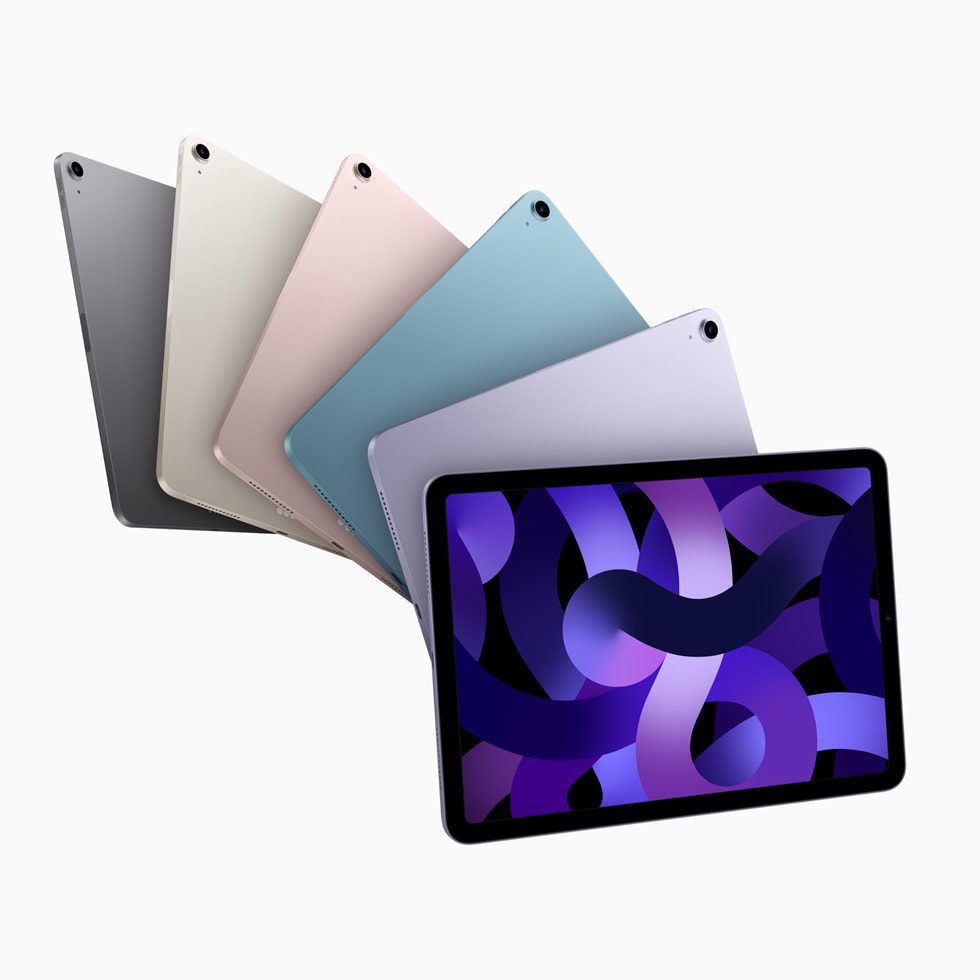
Here is when the new iPad Mini 7, iPad Air 6 & iPad 11 launching.

Apple’s iPhone 15 lineup is the latest in its smartphone lineup, but its latest iPads appear to be on their way soon as well. According to a new rumor, the company’s next-generation tablets will launch early next year.

Bloomberg’s Mark Gurman shared the news in his latest Power On newsletter. In March 2023, Apple is expected to unveil its new iPad lineup. In addition to the 11th Gen iPad, the 7th Gen iPad Mini, and the 6th Gen iPad Air will also be announced at the event. Gurman claimed earlier this month that the new iPads would be released by the end of 2023, contrary to a previous rumor that they would launch this month.

According to Mark, Apple plans to release these three new models in March 2023. A higher-end iPad Pro model is expected to be announced later this year. Apple’s M3 chipset is likely to power the iPad Pro. There is also an iPad Air model with a 12.9-inch display in the works. As soon as the new iPads are released, Apple will likely discontinue its first-generation Apple Pencil in favor of the new Pencil that features USB Type-C.

Another Gurman report claimed that Apple Mac’s launch could be just around the corner. There will be a 24-inch iMac refresh with improved hardware that may bump the Apple PC up to the M3 chipset. So far, no official announcement has been made by the company, so stay tuned for updates.

Samsung’s upcoming Galaxy S24, Galaxy S24 Plus & Galaxy S24 Ultra will arrive with powerful AI features.

As Google advertised its Pixel 8 and Pixel 8 Pro earlier this month, the devices’ AI capabilities will soon be one-upped by Samsung.

The Galaxy S24, Galaxy S24+, and Galaxy S24 Ultra are rumored to be the “smartest AI phones ever”, ahead of even the Pixels. With the S24 series, users will be able to create content and stories based on keywords, similar to ChatGPT and Google’s own Bard.

As part of the announcement of the Exynos 2400 chipset, which will power the S24 series in some markets, Samsung also announced some additional AI features, including text-to-image Generative AI. AI will also improve speech-to-text.

It claims Bixby (yes, Bixby) will have “more humanlike and smarter conversations” with you. It appears Bixby will become a much bigger thing as it incorporates AI and AI that in the future. In January, the S24 family is rumored to become official.

Samsung will bring the Galaxy S24, S24+, and 24 Ultra closer together in terms of display. Korean tech giant Samsung appears to be incorporating its new technology into all three models, not just the Ultra, as had been the norm in the past.

All three models will feature LTPO, M13 displays with 2,500 nits of peak brightness, according to X (formerly Twitter). Until now, only Ultra members could reach higher brightness with LTPO panels.

It will only differ in the display resolution and, of course, the size of the Galaxy S24. Variable refresh rate will now be available on non-Ultra models, but the 2,500 nits peak brightness likely refers to the panels’ ability to boost brightness when playing HDR content. Nevertheless, that’s an impressive value.

It makes a lot of sense to offer the best of what Samsung has to offer with the Galaxy S24 and S24+, which are still considered flagship phones.

Xiaomi officially reveals the first look at the new Xiaomi 14 ahead of the official launch.

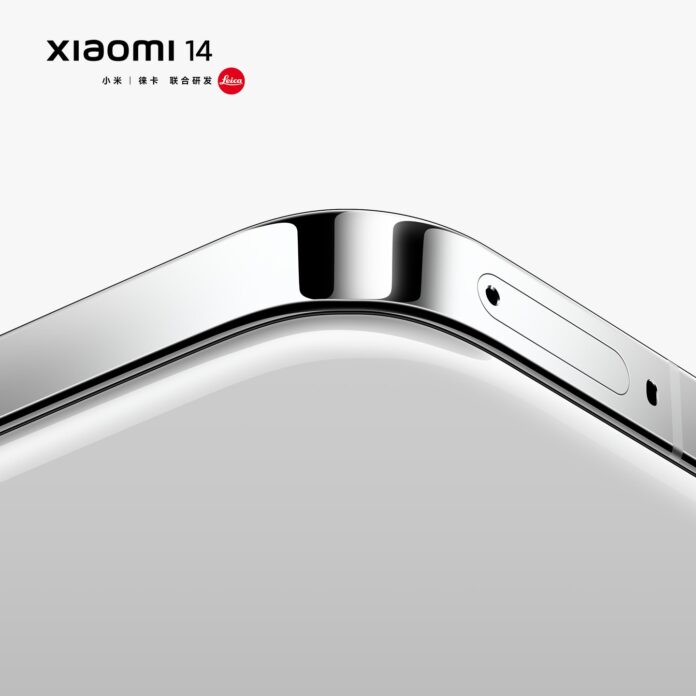
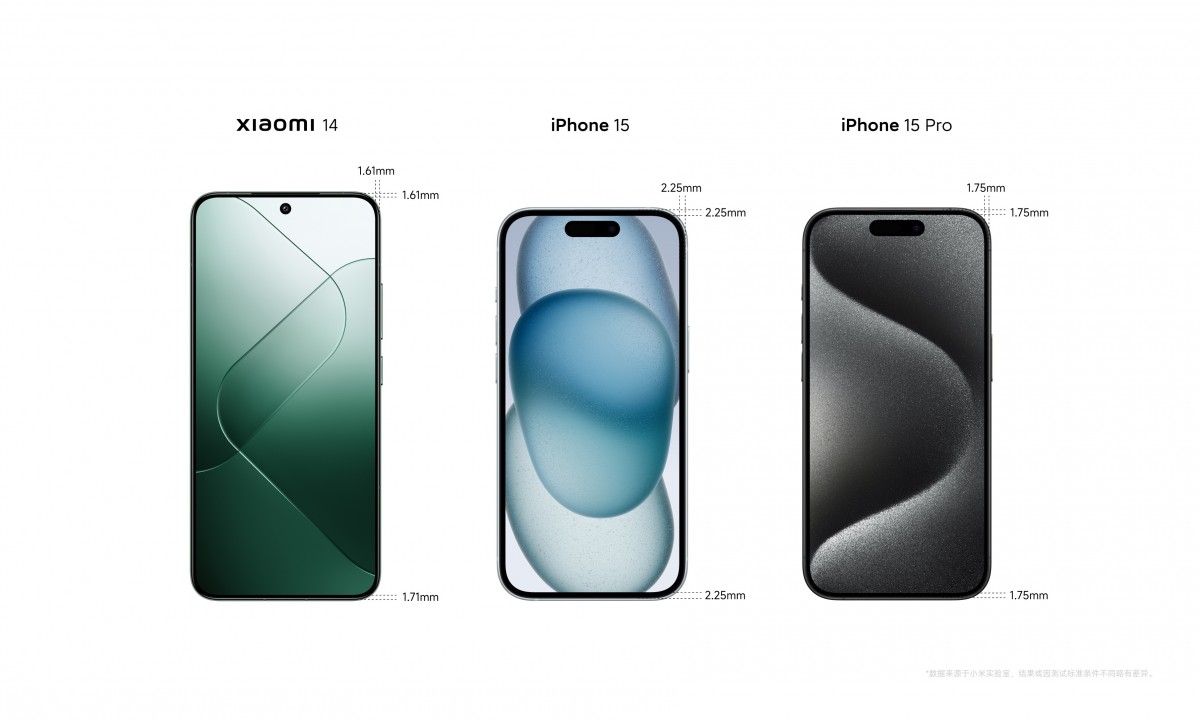
We got several official images highlighting the vanilla model’s design and some camera samples ahead of Xiaomi’s big October 26 launch. On Weibo, Xiaomi posted renders showing the Xiaomi 14’s flat frame design. Like the iPhone 15, the frame appears to have contoured edges. As a result, the phone would be more comfortable to hold.

Xiaomi 14:

The Xiaomi 14 is shown in its white colorway with a shiny flat frame that may indicate stainless steel. The device has a flat 6.36-inch AMOLED screen with a punch-hole cutout on top. The top, side, and bottom bezels measure 1.61mm and 1.71mm, respectively. It has a right-side power button and a volume button.

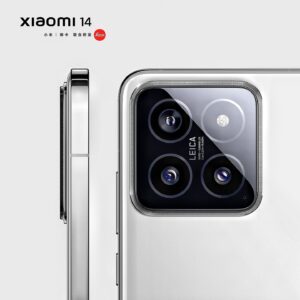
With three cameras equipped with Leica Summilux lenses, a 1/1.31″ sensor with 1.2m pixels and an aperture of f/1.6 is mounted on the back. It is rumored that the main sensor will be a 50MP OmniVision OV50H sensor and that it will be joined by a 75mm equivalent 50MP telephoto lens and a 50MP ultrawide module. The camera island’s outer area has been updated with studs.

Xiaomi CEO Lei Jun says the device’s top has no holes (like iPhones). It was accomplished by hiding the infrared sensor in the camera island. Further changing the speaker opening to a micro-slit, and hiding the secondary microphone inside the earpiece.

Here is when the new MediaTek flagship chip Dimensity 9300 SoC going to launch.

On November 6, MediaTek will unveil the Dimensity 9300 chipset at 19:00 local time in China.

With the upcoming Exynos 2400 and Snapdragon 8 Gen 3, which are both to be announced later today, Dimensity 9300 will be the chipmaker’s flagship SoC.

The CPU configuration of the Dimensity distinguishes it from its competitors. Instead of one Cortex-X4 core, it has four. There will be a 1.25GHz “prime” core and three 2.85GHz clusters arranged in a 1+3 arrangement. The other four cores will be Cortex-A720s running at 3 GHz – no Cortex-A520s here. Immortalis G720 will be the GPU.

There will only be one Cortex-X4 core on the Snapdragon 8 Gen 3 and the Exynos 2400, making the Dinemsity 9300 seem like the clear winner. The Cortex-X4 is harder to cool, so, in theory, the Dimensity 9300 could throttle more easily to maintain its thermals.

In early tests, the Dimensity 9300 surpassed the 2,000,000 threshold on AnTuTu. In comparison to the Snapdragon 8 Gen 2, that’s a 65% improvement in the CPU score and a 55% improvement in the GPU score.

According to early benchmarks, the Snapdragon 8 Gen 3 scored over 2 million on AnTuTu, while the Exynos 2400 has a ten-core processor, potentially giving it an edge.

4,765FansLike
753FollowersFollow
3,066FollowersFollow
206FollowersFollow