At CES 2023, Intel introduces the 13th Gen Intel Core mobile processor family, powered by Intel’s performance hybrid architecture. There are 32 new mobile processors introduced on Jan. 3, 2023. (Credit: Intel Corporation)
Earlier this month, Intel launched the Arc A580 discrete graphics card. Globally, the card is now available.
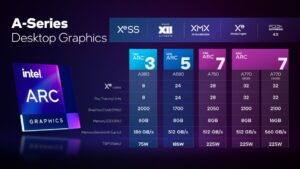
A580 offers 24 Xe cores and ray tracing units, as well as 1700MHz clock speed, though all currently announced cards feature overclocked 2000MHz clock speeds. Also included is 8GB of GDDR6 memory on a 256-bit wide memory bus for 512GB/s of bandwidth. It has a total board power of 185W. In terms of specifications, the A580 is very similar to the A750.
It was first announced alongside the other Arc A-series graphics cards over a year ago. Three of the four cards were launched last year, but the A580 was never mentioned again. Intel likely waited until there was enough inventory of unused wafers from the 7-series before producing the A580 since it uses the same GPU as the A750 and A770.
With specs similar to the A750, you can expect a fairly similar performance. With XeSS, Intel’s AI-based image upscaling and reconstruction technology, the A580 is targeting a 1080p high settings experience.
ASRock, Gunnir, and Sparkle all offer the A580. The card will be available in all regions currently selling Intel Arc cards starting at $179.
Initial rumors suggested that the OnePlus 12 would have a 50MP primary camera, a 50MP ultra-wide camera, and a 64MP telephoto camera.
According to leakster Digital Chat Station, the ultra-wide cam will have a 48 MP 1/2″ sensor with f/2.2 aperture, while the zoom lens has a 64 MP OmniVision OV64B sensor with OIS. The new main sensor – Sony IMX966 – is the biggest surprise.
The new Sony sensor is expected to perform similarly to the Sony IMX989, a 1″ imager. The double-layer build compensates for its smaller size by improving sensitivity.
With Snapdragon 8 Gen 3, the new sensor will be equipped with optical image stabilization. Furthermore, the 64 MP telephoto camera, which is expected to have 3x optical zoom, will have even better low-light performance, thanks to the Qualcomm chipset.
OnePlus 12 is expected to debut in China in December and be released globally in early 2024.
Specs:
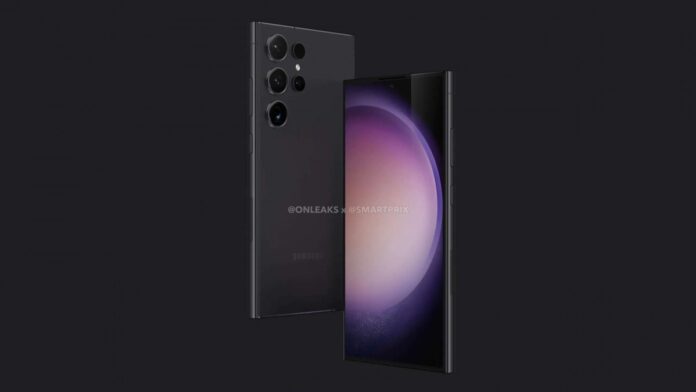
Once again, reliable tipster Steve Hemmerstoffer (aka Onleaks) has shared the key specifications of the smartphone. As the successor to last year’s OnePlus 11, the OnePlus 12 is expected to launch this December.
OnePlus 12 will ship with the same 6.7 inches (3216 x 1440 p) 2K LTPO 3.0 AMOLED 2.75D flexible curved display. The display is protected by Corning Gorilla Glass Victus on top. It comes with a center punch-hole notched display this time.
The OnePlus 12 is powered by Snapdragon 8 Gen 3 SoC coupled with 8GB/16GB RAM and 128GB/256GB storage space. It features triple rear cameras which are been customized by Hasselblad.
It features a 50MP main sensor with OIS coupled with a 64MP telephoto lens and 3x optical zoom. There is a 50MP ultra-wide lens with LED flash. This time there is a massive 32MP selfie shooter.
The connectivity option includes Dual SIM with Dual 4G LTE and VoLTE support, 5G Dual Mode (SA/NSA) support, Wi-Fi 7, A-GPS, GLONASS, Bluetooth 5.2, NFC, USB Type-C port and 1216 Linear Speaker, Dolby Atmos, Hi-Res Audio certification.
It comes with an IP54 rating making it dust and water-resistant. The device packs a 5400 mAh battery with 100W fast wired & 50W fast wireless charge support. It runs on Android 14 With ColorOS 14 on top.
Satellite internet services will be launched in India by Amazon. The company aims to provide affordable broadband internet services in rural areas of India. As part of its efforts to obtain the spectrum licenses required to operate satellite communication services in India, Amazon has already contacted the Indian Government.
‘Project Kuiper’ is Amazon’s satellite internet service. Starlink by SpaceX, Airtel-backed OneWeb, and even Reliance’s Jio satellite are potential competitors for Amazon in the satellite internet services market.
Amazon’s representative confirmed to the Economic Times that the company plans to launch satellite internet services in India. In addition to satellite communication, Amazon’s IT business has long-term plans for India.
Using 3236 satellites in lower earth orbit, Amazon’s Project Kuiper will provide internet connectivity to remote areas. SpaceX’s Starlink is similar to this concept. Currently, Kuiper is in the testing phase and has not been released to the public.
Amazon has already applied for approval from the Indian National Space Promotion and Authorization Centre (In-Space) for its satellite communications services. A GMPCS (Global Mobile Personal Communication by Satellite) license will also be applied for with the Department of Telecommunications (DoT).
There are already three potential competitors for Amazon’s satellite services in India. GMPCS permits have already been granted to Jio Satellite and Airtel-backed OneWeb by Reliance. There is also a report that Starlink’s application is in the process.
According to Amazon, its Kuiper satellite internet service should offer speeds of 100Mbps to 1Gbps. Commercial subscription plans have not yet been announced by the company, but are expected to be announced next year.
During the Pixel 8 series launch event, Google introduced Assistant with Bard. There is now speculation that Samsung Galaxy S-series phones and Tensor-powered Pixel phones will be the first to receive this feature.
The Assistant with Bard feature is set to arrive on the Pixel 8 series soon. According to 9To5Google, Google is also planning to introduce Assistant with Bard to the Galaxy S24. According to the publication, the Google app beta version 14.41 indicates plans to integrate this feature with the Tensor-powered Pixel 6 and more recent devices, as well as the Galaxy S23.
AI-driven digital voice assistant will first appear on the Pixel 8, then on the Galaxy S24 early next year. Before the feature becomes more widely available, older Tensor-based Pixels and the Samsung Galaxy S23 series are expected to receive it next.
Assistant with Google Bard:
An advanced AI personal assistant is Google’s Assistant with Bard. Combined with the Assistant’s personalized support, Bard generates content and thinks logically. It can send users text, voice, or image messages, as well as perform tasks on their behalf.
According to Google, Assistant with Bard will be a more customized assistant connected to Google services like Gmail and Docs. Users will also be able to use it on Android and iOS mobile devices in the near future, according to Google.
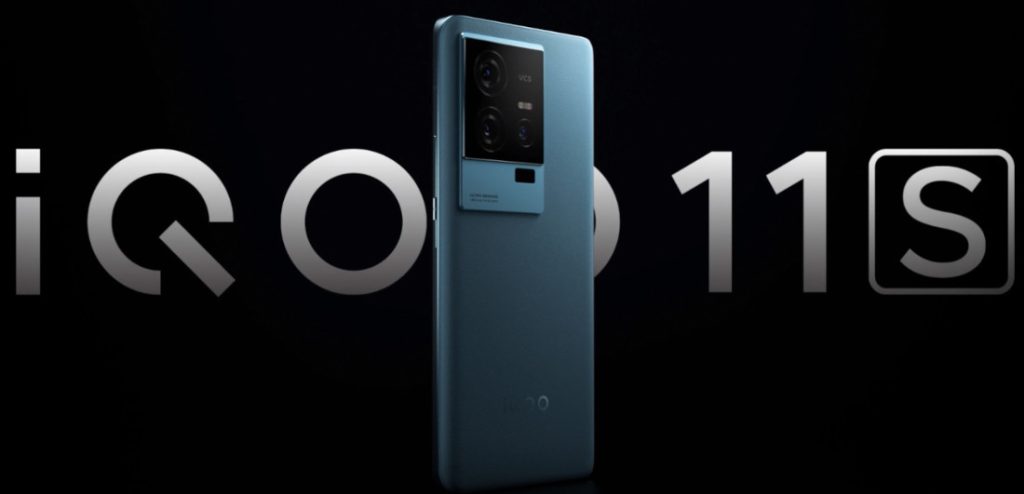
Looks like iQOO is going to set the launch of its next smartphone earlier than expected. This year we saw iQOO launching the iQOO 11 in Jan which was also the first device powered by Snapdragon 8 Gen 2 in India. Now the same thing is gonna repeat with the successor aka iQOO 12.
As per the tipster, the new iQOO 12 will be the first flagship powered by Snapdragon 8 Gen 3 SoC in India. Further, the source also revealed that the iQOO 12 will be launching in India sometime in late Nov or early December if all goes well. Apart from this nothing much about the device is known at the moment.
With Qualcomm launching its flagship chipset Snapdragon 8 Gen 3 SoC later this month we can expect the iQOO 12 series to launch in China by mid-November.
iQOO 12:
Vivo’s iQOO 12 phone is rumored to have a 64 MP telephoto camera, and today a reliable leakster confirmed that – we’re looking at an OmniVision 64B sensor with a 3x telephoto lens.
Besides having an OmniVision sensor – OV50H with 50 MP resolution and OIS, the ultrawide-angle camera will have a Samsung ISOCELL JN1 sensor with 50 MP resolution.
The early leaks from Digital Chat Station are usually accurate, and we believe this one is as well. It has been six generations since an iQOO 5 Pro 5G with an 8 MP telephoto camera and 5x optical zoom was introduced with a periscope lens. Vivo is still not ready to reintroduce an iQOO with a periscope lens yet.
However, adding a 64 MP camera with OIS (a feature surprisingly missing from the predecessor iQOO 11 Pro) is a big step forward. iQOO was originally designed for gamers, but has evolved into a power user brand. The new installment series should finally enable a flagship camera experience for those with the new vivo V3 ISP.
The Samsung Galaxy M34 5G smartphone was launched in India in July. Galaxy M34 5G features a 6.5-inch AMOLED display and a 50MP triple-camera setup. The Galaxy M44 appears to be the successor to the M34 5G. Samsung has yet to reveal the launch date of the device, but an image shared by tipster Anthony on X (formerly Twitter) reveals its first look.
According to the leaked image, the Galaxy M44 will have the same design as the Galaxy M34 5G. There will be a triple-camera setup on the back, along with an LED flash. Last month, the smartphone was spotted at NRRA Korea certification. According to the listing, the device’s model number is SM-M446K.
Geekbench also spotted the handset back in July, aside from NRRA certification. Qualcomm’s Snapdragon 888 SoC will power the smartphone, based on the benchmark listing. There is a possibility that the smartphone will pack up to 6GB of RAM. It is expected that the handset will come with Android 13 pre-installed.
It is not yet known when the device will launch. The smartphone will be available in India, Korea, and a few other countries in the near future. It will succeed Samsung’s Galaxy M34 5G, as stated above.
Xiaomi is reportedly planning to skip MIUI 15 altogether and launch a new operating system called MiOS instead, according to Digital Chat Station. According to Xiaomiui, a blog that only covers Xiaomi-related news, these claims are completely false and unfounded.
Xiaomi is still testing MIUI 15 internally and is expected to release it with the Xiaomi 14 series in the near future. In addition, there are no relevant details about MiOS at the moment.
In the future, Xiaomi may switch from MIUI to MiOS, according to the blog. According to them, if Xiaomi makes such a switch, it will probably happen only in China, and MiOS won’t be available worldwide.
It shared some code snippets showing that MIUI 15 is being tested on different Xiaomi smartphones. It is reasonable to consider these hints to be reliable since they were obtained from the official Xiaomi server. Xiaomi 13 Ultra, Redmi K60 Pro, Mix Fold 3, and Xiaomi 13 are all in the testing phases of MIUI 15.
Even though it is too early to say whether Xiaomi is truly planning to retire MIUI and launch MiOS, the fact that the company is already testing MIUI 15 suggests that it won’t disappear anytime soon, at least not in the global market.
We just got a look at the foldable smartphones, the OnePlus Open and Oppo Find N3, in a new leak. It comes a mere few days after Anushka Sharma, an Indian actress, was spotted with the OnePlus Open. Now we have got the detailed specs along with press images of the new OnePlus Open leaked.
Oppo N3 Fold, which will be launched in China in the coming days, is technically and visually identical to the OnePlus Open. There is no difference between the two models on the outside, so the interior should be the same as well.
Design:
The OnePlus Open looks more compact than the previously leaked render, which had a taller form factor. As a result, its aspect ratio has been widened to resemble that of the OPPO Find N2 or even the Google Pixel Fold. It also looks tiny, almost the size of a wallet. All sides of it are curved.
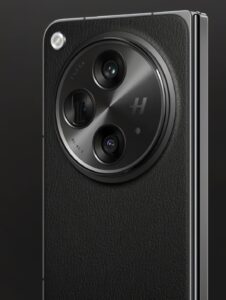
The circular camera module on the back panel also becomes larger. The device is equipped with two sensors, a periscope lens, an ‘H’ branding confirming the presence of Hasselblad, and another sensor that may be a Time-of-Flight or LiDAR sensor. There is no change in the position of the LED flash unit on the back panel, although its size has increased. Also, the foldable phone’s back panel is textured with faux leather.
Both the interior and exterior displays of the OnePlus Open have thin bezels. On the main display, the punch-hole is located in the center, while on the interior screen, it is located in the top right corner.
OnePlus Open’s new renders are characterized by its boxy form factor. On the right edge, there are two rocker buttons, the first of which probably doubles as a fingerprint reader. The left side of the device also features the brand’s iconic Alert Slider. There will be four speakers on the foldable phone, located at the top and bottom of the device. At the bottom of the device is a USB-C port.
Specs:
The new OnePlus Open sports a massive 7.8-inch QHD+ foldable punch-hole internal LTPO AMOLED display with a 120Hz refresh rate. Further, there is a smaller 6.31-inch outer punch-hole AMOLED display with an 18:9 aspect ratio & resolution of 2120 × 1080p. Now, the outer display also supports a 120Hz refresh rate. There is a Corning Gorilla Glass Victus on top for the internal display.
The OnePlus Open is powered by SD 8 Gen 2 SoC coupled with 12GB/16GB RAM and 256GB/512GB UFS 3.1 internal storage. The phone comes with gesture support like a two-finger swipe down allowing split-screen for multi-tasking or a four-finger pinch making the full-screen app into a floating window.
There is a total of five cameras three on the back and two selfie cameras one outer other for internal display. The OnePlus Open features a 48MP main sensor coupled with a 48MP ultra-wide sensor and a 64MP periscopic sensor. There is a 32MP Sony IMX615 selfie shooter on both the inner & 20MP on the outer display. It comes with a side-mounted fingerprint scanner.
The OnePlus Open packs a 4800mAh battery with 67W Super VOOC charge support & 15W wireless charging support. It also gets 10W reverse wireless charging support. The OnePlus Open runs on Android 13 with OxygenOS 13 on top.
In the United States, the OnePlus Open will be available from October 19, 2023 for just under $1,700 (Rs.1,41,600/-).
According to reports, Vivo will launch its new line of foldable smartphones soon. Vivo’s new X Fold 3, X Fold 3 Pro, and X Flip 2 are apparently in development and may launch early next year.
During the first quarter of next year, the Chinese tech giant plans to release three new foldable phones. Along with the X Fold 3, X Fold 3 Pro, and X Flip 2, these new devices will launch around the same time as the flagship X100 Pro+ model. Vivo X100 rumors are already surfacing right now.
MediaTek Dimensity 9300 SoCs are expected to power the X100 and X100 Pro, while Qualcomm Snapdragon 8 Gen 3 SoCs could power the X100 Pro+. The Vivo X Fold 3 Pro with model number V2337A was recently spotted on the IMEI database. The specific differences between X Fold 3 and X Fold 3 Pro remain unclear.
The company is also rumored to launch the X Flip 2 in China around the same time as the top-end model. The new foldable phones will replace the older X Fold 2 lineup and the original X Flip smartphone. Although the devices are expected to launch in China soon, it is unclear which models will be available abroad.
Oppo is about to announce the next foldable in India with the new Oppo Find N3 Flip. Ahead of the launch we have now got the official Indian pricing details of the new Oppo Find N3 Flip.
As per the source, the new Oppo Find N3 Flip will set you back with a price tag of Rs.94,999/- but with offers the device will cost Rs.89,622/- in India.
Oppo Find N3 Flip:
The new Oppo Find N3 Flip looks exactly similar to its predecessor but comes with a huge circular camera module. The device still carries the same 3.62″ cover display (a 60Hz OLED panel, 382 x 720px). There are many uses for this – from taking selfies to showing QR codes to checking the weather to changing some settings.
It comes with a 6.81 foldable FHD+(2520 × 1080p) E6 AMOLED display on the inside with 120Hz refresh rate support. The display is protected by SCHOTT UTG glass protection on the inner & Corning Gorilla Glass Victus on the rear display. It measures 7.79mm when unfolded and 16.45 when folded. It weighs 198g. There will be three colors available: Moonlight, Rose, and Black colors.
The new Oppo Find N3 Flip comes with MediaTek Dimensity 9200 SoC coupled with 12GB RAM and 256GB/512GB storage.
The new Oppo Find N3 Flip comes with triple rear cameras with a 50MP main Sony IMX890 sensor with f/1.8 aperture and 48MP Sony IMX581 ultra-wide sensor with f/2.2 aperture & 114-degrees FoV. The last one is a 32MP Sony IMX709 telephoto lens with 2x optical zoom with f/2.0 aperture & Hasselblad camera support.
There is a 32MP Sony IMX709 selfie shooter. Other features include dual SIM, 5G, Bluetooth 5.3, NFC, Wi-Fi 6, a side-mounted fingerprint scanner, and IPX4.
The Oppo Find N3 Flip packs a 4300 mAh battery with 44W Super VOOC charge support. It runs on Android 13 with ColorOS 13 on top.