


4G clearly isn’t going anywhere just yet. Qualcomm has quietly introduced two new chipsets aimed at budget and mid-range phones: the Snapdragon 6s 4G Gen 2 and the Snapdragon 4 Gen 4.
Snapdragon 6s 4G Gen 2:
The Snapdragon 6s 4G Gen 2 brings a notable performance bump over its predecessor. Its Kryo CPU now reaches up to 2.9GHz, which Qualcomm claims is up to 51% faster than the Gen 1. The Adreno GPU is also improved, offering up to 20% higher performance and support for 1080p+ displays running at up to 120Hz.
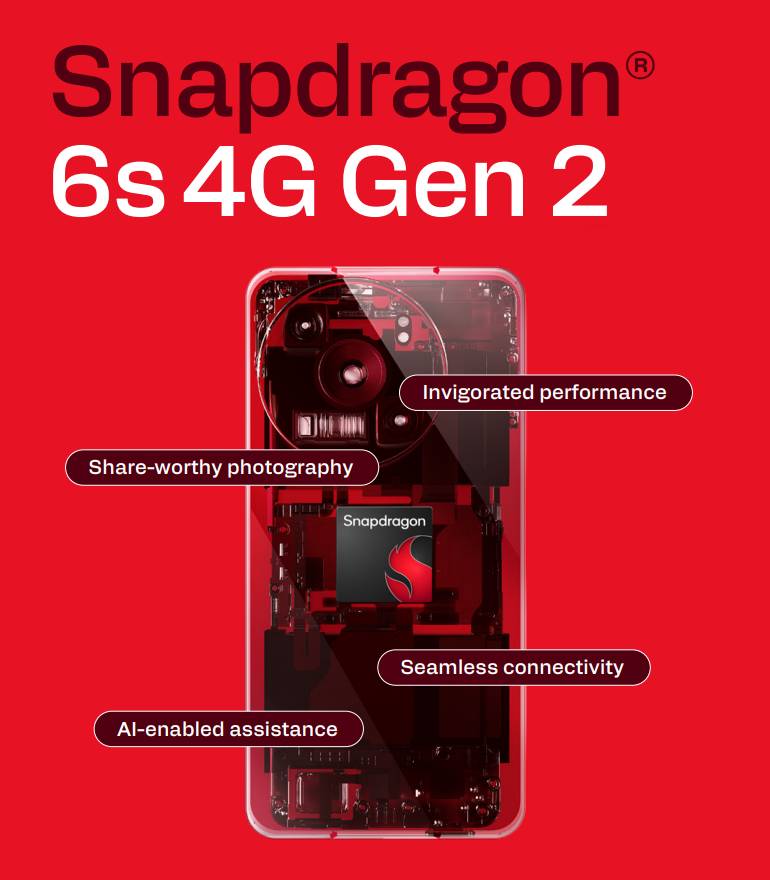
The SoC is manufactured on a 6nm process – not cutting-edge, but still significantly more modern than the 11nm node used for the original 6s 4G Gen 1. It supports up to 8GB of LPDDR4X RAM at 2,133MHz and UFS 2.2 storage. For wired connectivity, there’s USB up to 3.1 speeds and support for Quick Charge 3, which Qualcomm says can deliver an 80% charge in 35 minutes (battery capacity is not specified).
On the camera side, the Snapdragon 6s 4G Gen 2 can handle sensors up to 108MP. It’s 12-bit triple ISP can operate with 13MP + 13MP + 5MP setups simultaneously, or 16MP + 16MP setups with zero shutter lag if you’re using only two cameras. It supports HEIC photo capture and HEVC video recording, though video tops out at 1080p at 60fps.
As the name suggests, this chipset is strictly 4G. It integrates an LTE modem with peak download speeds of up to 390 Mbps and peak upload speeds of 150 Mbps. Local wireless connectivity is more old-school as well, offering Wi‑Fi 5 (802.11ac, dual-band) and Bluetooth 5.2 with aptX Adaptive. For location services, the chip supports dual-band GPS plus GLONASS, Galileo, BeiDou, QZSS and NavIC, along with Qualcomm’s sensor-assisted positioning to improve accuracy whether you’re driving or walking.
Snapdragon 4 Gen 4
The Snapdragon 4 Gen 4, on the other hand, is very much built for the 5G world. It comes with a sub-6GHz 5G modem compliant with 3GPP Release 16, supporting both SA and NSA modes and offering peak speeds of up to 2.5Gbps down and 900Mbps up. However, local connectivity remains conservative, with Wi‑Fi 5 (ac, dual-band) and Bluetooth 5.1 with aptX. Positioning support mirrors that of the 6s 4G Gen 2.
This chip is manufactured on a more advanced 4nm process. Its CPU configuration consists of two Kryo cores clocked up to 2.3 GHz and six additional cores clocked up to 2.0 GHz. The Adreno GPU again supports 1080p+ displays running at 120Hz.
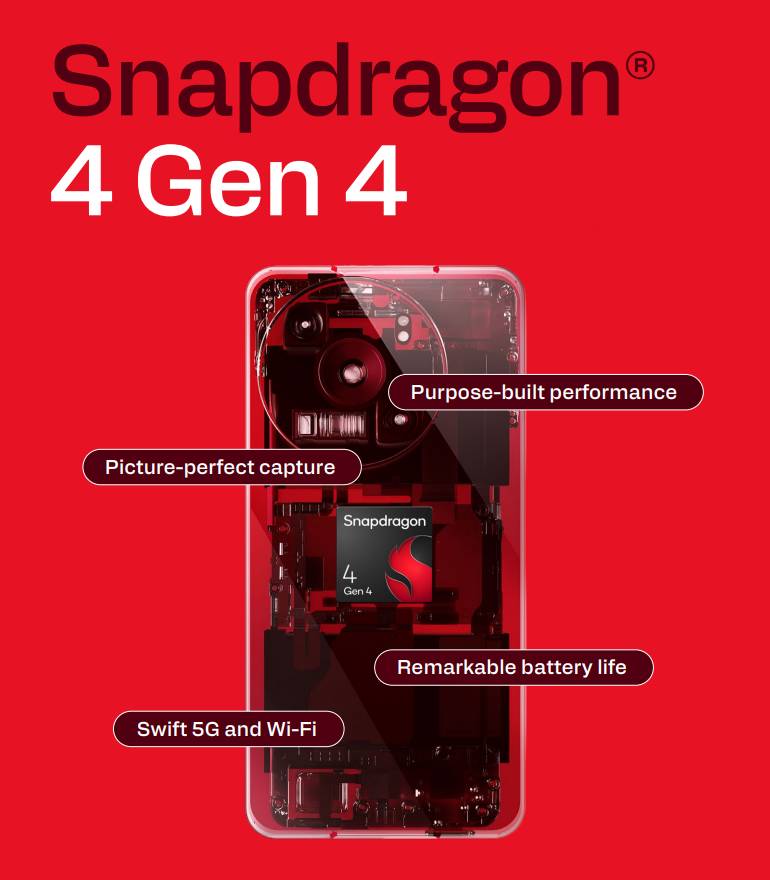
Memory and storage support get a boost here. In addition to LPDDR4X, the Snapdragon 4 Gen 4 also supports faster LPDDR5 RAM at up to 3,200MHz. Storage can be UFS 3.1 (2-lane), which is a healthy step up from the older UFS 2.x standards. The chipset can connect to USB 3.2 Gen 1 ports and supports Quick Charge 4+, which can reportedly recharge a battery to 50% in about 15 minutes.
Camera capabilities are similar but not identical to the 6s 4G Gen 2. The Snapdragon 4 Gen 4 can also work with sensors up to 108MP, but here you get a dual ISP rather than a triple one, supporting 16MP + 16MP configurations with zero shutter lag. Video capture is, once again, limited to 1080p at 60fps, and neither this chipset nor the 6s 4G Gen 2 supports AV1 hardware decoding.
Devices powered by the Snapdragon 6s 4G Gen 2 and Snapdragon 4 Gen 4 are expected to hit the market next year.