Vivo and iQOO are preparing to launch the Vivo X100 series and iQOO 12 lineup in China. Chinese tipsters have revealed the expected launch dates for both series.
The iQOO 12 series is now set to launch in China in early November, aligning with the Double Eleven sales event on November 11. The Vivo X100 series will debut shortly after Double Eleven.
In addition, another leaker has voiced doubt about Vivo’s X100 series launching in early November, suggesting that aligning with Double Eleven may be challenging. The iQOO 12 series will be primarily available online in time for Double Eleven, while the X100 series will follow after this event. It is also rumored that the iQOO 12 (not the Pro variant) will debut in India in the same month.
iQOO 12 and 12 Pro are two Snapdragon 8 Gen 3-powered devices in the iQOO 12 lineup. Qualcomm is expected to unveil the Snapdragon 8 Gen 3 at its upcoming Snapdragon Summit event in 2023. According to reports, Xiaomi will launch the first smartphone powered by Snapdragon 8 Gen 3. Xiaomi 14 and 14 Pro may become official on October 27, according to reports.
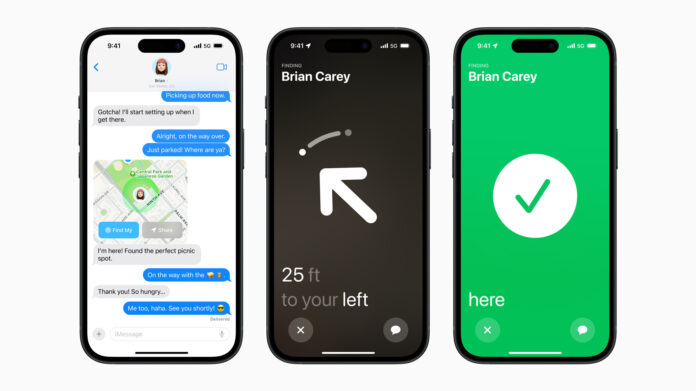
Apparently, Apple is developing a technology to pre-update iPhones before they reach consumers. A special wireless pad will be used to update iPhone units without having to open the box before the end of the year.
According to Bloomberg’s Mark Gurman, Apple isn’t just considering this as an idea but is actively working on it. With this system, multiple iPhone units will be able to be activated, updated, and powered down without having to remove them from their original packaging.
As a result of this move, smartphone users, particularly those without a lot of technological knowledge, will be able to solve a common dilemma. In order to ensure optimal performance and security, a new iPhone often requires an immediate software update. This crucial step is often overlooked by first-time users, leaving their devices potentially vulnerable or underperforming.
Whether Apple will extend this feature to its carrier partners is the big question looming over this development. In the absence of confirmation, it’s unclear whether these advanced pads will be sent to other retailers that stock iPhones.
It remains to be seen how Android manufacturers will respond to Apple’s entry into this territory. Are they likely to follow suit if they provide a pre-updated experience, or will this be a unique selling point that sets Apple apart from its competitors?
After a long wait, Sonos Era 300 and Era 100 launched in India. The Sonos Era 300 is Sonos’ first venture into Spatial Audio and is the brand’s first product in this category. As for the Sonos Era 100, it is the predecessor to the wildly popular Sonos One. Due to several upgrades in hardware and software, these smart speakers are designed to usher in a “new era of sound.”
Sonos Era 300 & Era 100:
Sonos Era 300 features a cinched hourglass design that houses the complex acoustic architecture. Using each detail of the design, Sonos claims to improve sound direction and dispersion for a more immersive surround sound experience. The first speaker with Dolby Atmos spatial audio is the Sonos Era 300.
An industry-first for single compact speakers, the Sonos Era 300 features six powerful drivers that project sound in all directions. The Era 300 features four tweeters for high- and mid-range audio and two woofers for low-end output. Left and right woofers are placed on each side of the unit. For immersive sound, the Era 300 can be paired with Sonos Arc or Beam.
On the other hand, Sonos Era 100 delivers next-generation acoustics, crisp stereo sound, and deeper bass. It features two angled tweeters for high and midrange frequencies. There is also a single woofer on the Era 100 that provides powerful bass and low-frequency reproduction. To create surround sound, users can pair two Era 100 speakers to create powerful stereo sound.
With the new speakers, Sonos offers an intuitive user interface and a capacitive volume slider. The Sonos Era 100 and 300 are both equipped with Trueplay technology, which enhances the audio based on the acoustics of your room. Android and iOS users can access the feature by tapping one button in the Sonos app. These speakers also support Apple AirPlay 2, Sonos Voice Control, Wi-Fi, and Bluetooth.
Pricing:
In India, the Sonos Era 300 will go on sale on October 20. It will be available for pre-order from October 15 and will cost Rs 54,999. Meanwhile, the Sonos Era 100 is priced at Rs 29,999. On the same day as the Sonos Era 300, it will be available for pre-order. Sonos.com will sell both of these smart speakers
POCO C65, the rebranded Redmi 13C, is in the works. Redmi 13C 5G’s model number and specifications are revealed in a new report. The Redmi 13C 5G has different model numbers for different regions, according to Xiaomiui.
The model number 23124RN87C is for China, 23124RN87G for Global regions & 23124RN87I for India. Previously, these model numbers had been incorrectly associated with the Redmi 13C 4G.
There are three model numbers for the Redmi 13C 4G: 23100RN82L, 23108RN04Y, and 23106RN0DA. The device will be released in global and Indian markets, but not in China. The POCO C65 comes with two model numbers 2310FPCA4G for Global & 2310FPCA4I for India.
Redmi 13C 5G is equipped with the Dimensity 6100 Plus chipset, and Redmi 13C and its rebranded POCO C65 are powered by the Helio G85. There are no other details about the 5G variant.
Earlier this month, leaked renders of the Redmi 13C appeared online. The device features a teardrop notch display, a USB-C port, and a 50-megapixel primary camera. It is expected that the 13C series will run MIUI 14-based Android 13.
OnePlus has earned a reputation for delivering top-notch performance and innovative features in smartphones. We’re eagerly awaiting the launch of the OnePlus 12, and recent reports from Digital Chat Station have provided interesting details about its display specifications.
With the OnePlus 12, OnePlus is set to embrace cutting-edge display technology. It is reported that the device features a brand new BOE substrate curved screen. It promises a striking design as well as a more immersive experience.
The OnePlus 12 display measures 6.82 inches, providing ample space for all your mobile needs. Users can enjoy crisp and vibrant visuals when streaming video or playing games with 3168 x 1440p resolution.
With an adaptive 120Hz refresh rate, the OnePlus 12 will have a fluid touch experience. When you need battery power most, this technology conserves it.
Additionally, the brightness of the display has been optimized. There will be a “little adjustment” for the best viewing experience at full brightness. Also, the screen’s low brightness PWM dimming frequency was increased to 2160Hz, which reduced flickering.
A peak brightness of 2600 nits is expected on the OnePlus 12 display. Your screen will remain visible even in direct sunlight, making outdoor use more convenient.
According to DCS, the OnePlus 12’s top configuration will have 24GB of RAM and 1TB of storage. In addition to 16GB/512GB, the company already offers a 24GB/1TB model (the Ace 2 Pro).
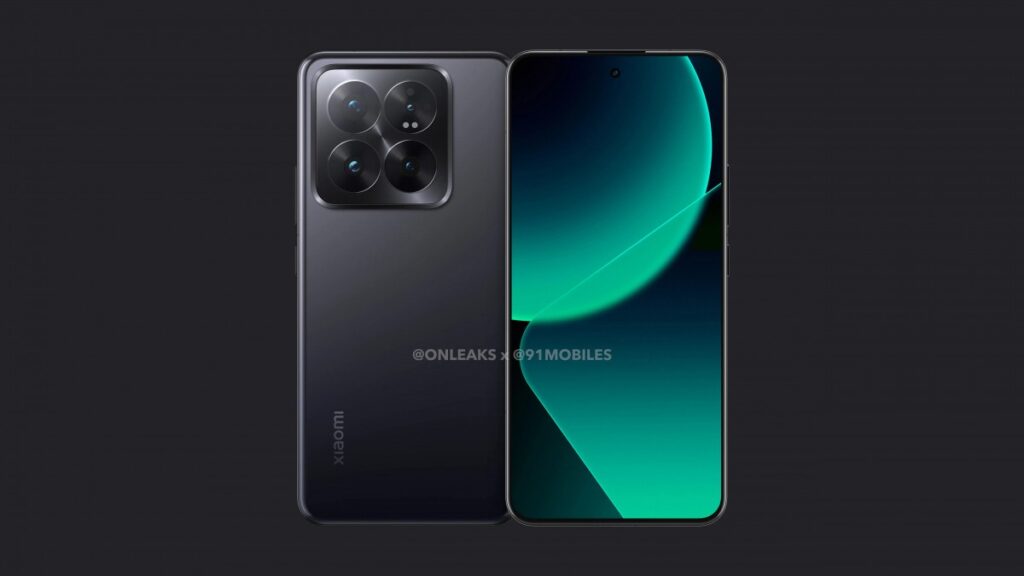
It is rumored that Xiaomi will unveil the Xiaomi 14 and 14 Pro on October 27. It is yet to be revealed what Xiaomi’s 14 Pro will look like, but thanks to OnLeaks, we know what it will look like.
According to OnLeaks‘ 5K renders of the Xiaomi 14 Pro, the phone will come with some improvements over its predecessor, the Xiaomi 13 Pro. Xiaomi seems to be opting for a flat display instead of a curved one. Besides being thicker than the Xiaomi 13 Pro, the camera module appears huge.
According to these renders, the Xiaomi 14 Pro will measure 161.6 x 75.3 x 8.7mm, and the camera module will be 13.1mm high. The Xiaomi 14 Pro will feature a 6.6-inch flat 2.5D display with a punch-hole camera at the center. The upcoming Xiaomi phone could have four cameras as well as other sensors. Dual speakers are also expected.
Specs:
Xiaomi 14 Pro will feature a 6.6-inch AMOLED 2.5D display with 2K resolution and a 120Hz refresh rate. Qualcomm’s Snapdragon 8 Gen 3 chipset is expected to power the smartphone later this month. Despite a lack of details about the Xiaomi 14 Pro’s cameras, it’s speculated to come with a 50MP primary camera.
It could have a 4,860mAh battery with 120W fast charging and 50W wireless charging support. Additionally, the Xiaomi 14 Pro is expected to come with an in-display fingerprint sensor, Hi-Res audio, and Dolby Atmos.
Xiaomi 14 Series run on MiOS:
One of the most anticipated smartphones of the year is the Xiaomi 14 series. We now have some new information about the Xiaomi 14 model.
Xiaomi 14 is in mass production in a new pink shade, which is said to be very good-looking, according to tipster Digital Chat Station (DCS). The screen will also have a 1mm bezel, just like the Pro model.
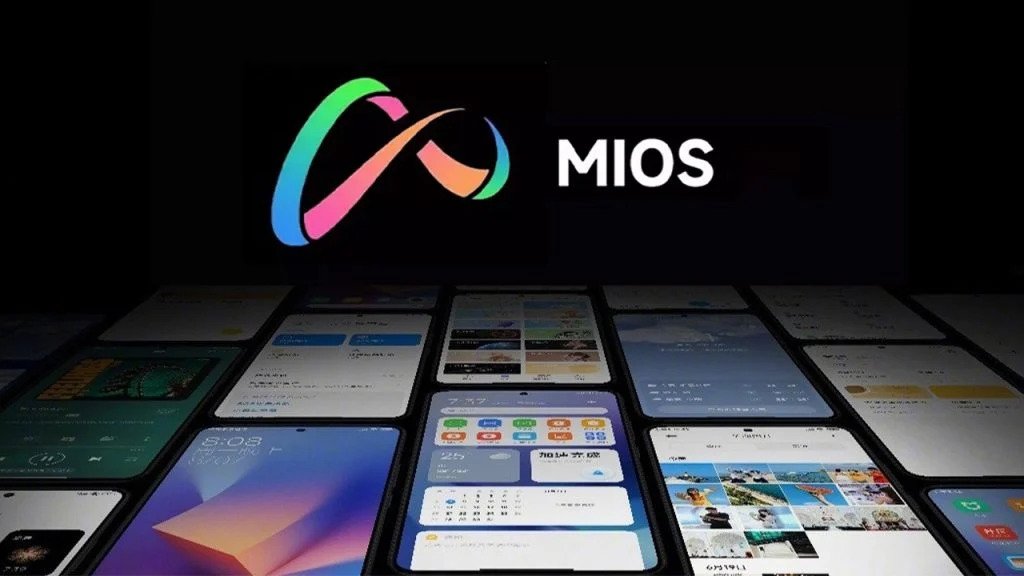
In addition, DCS notes that Xiaomi’s “new system focuses on smoothness,” which is likely a reference to MiOS. Xiaomi’s new operating system, MiOS, is expected to replace MIUI.
Earlier this week, DCS hinted that MIUI 14 would be the last generation of MIUI. The switch from MiOS to MIUI, however, will likely only happen in China, and MiOS will not be globally available. The arrival of MiOS has also been hinted at by other tipsters, such as Ice Universe. At least in China, the new OS may be seen.
Jeff Pu, a well-known tech analyst, has revealed some of the major improvements coming to the iPhone 16 Pro and Pro Max next year. The new Pro iPhones will support Wi-Fi 7, up from the Wi-Fi 6e models of the iPhone 15 Pro. Both 16 Pro and 16 Pro Max will also feature Qualcomm Snapdragon X75 modems that should provide faster 5G download speeds, as well as longer battery life.
A 48MP ultrawide camera will be added to both 16 Pro models, and the 16 Pro will add a 12MP tetra-prism lens, similar to that found on the iPhone 15 Pro Max, with a 5x optical zoom. Due to the larger screen sizes of the upcoming iPhone Pros – the 16 Pro is expected to feature a 6.3-inch screen while the 16 Pro Max will likely have a 6.9-inch panel – a new zoom sensor will be fitted.
The vanilla iPhone 16 will feature a less powerful version of the A17 Pro chip found on the 15 Pro and 15 Pro Max, 8GB RAM, the same dual cameras as the iPhone 15, and Wi-Fi 6e.
Oppo & OnePlus are launching new foldable devices with the Oppo Find N3 & OnePlus Open later next week. Ahead of the launch we already got a series of leaks revealing the specs along with press renders. Now way ahead of the official launch, we have the Indian pricing and availability details leaked.
As per the popular tipster, the new OnePlus Open will surely be an expensive device and might be available in limited numbers. The OnePlus Open will cost over Rs.1,39,999/- in India and comes in a 16GB+256GB variant only. Further, the source revealed that the first sale of the OnePlus Open starts on Oct 27.
Design:
The OnePlus Open looks more compact than the previously leaked render, which had a taller form factor. As a result, its aspect ratio has been widened to resemble that of the OPPO Find N2 or even the Google Pixel Fold. It also looks tiny, almost the size of a wallet. All sides of it are curved.
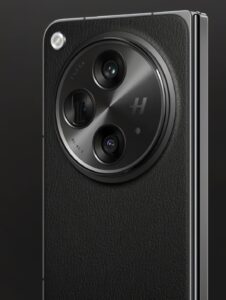
The circular camera module on the back panel also becomes larger. The device is equipped with two sensors, a periscope lens, an ‘H’ branding confirming the presence of Hasselblad, and another sensor that may be a Time-of-Flight or LiDAR sensor. There is no change in the position of the LED flash unit on the back panel, although its size has increased. Also, the foldable phone’s back panel is textured with faux leather.
Both the interior and exterior displays of the OnePlus Open have thin bezels. On the main display, the punch-hole is located in the center, while on the interior screen, it is located in the top right corner.
OnePlus Open’s new renders are characterized by its boxy form factor. On the right edge, there are two rocker buttons, the first of which probably doubles as a fingerprint reader. The left side of the device also features the brand’s iconic Alert Slider. There will be four speakers on the foldable phone, located at the top and bottom of the device. At the bottom of the device is a USB-C port.
Specs:
The new OnePlus Open sports a massive 7.8-inch QHD+ foldable punch-hole internal LTPO AMOLED display with a 120Hz refresh rate. Further, there is a smaller 6.31-inch outer punch-hole AMOLED display with an 18:9 aspect ratio & resolution of 2120 × 1080p. Now, the outer display also supports a 120Hz refresh rate. There is a Corning Gorilla Glass Victus on top for the internal display.
The OnePlus Open is powered by SD 8 Gen 2 SoC coupled with 12GB/16GB RAM and 256GB/512GB UFS 3.1 internal storage. The phone comes with gesture support like a two-finger swipe down allowing split-screen for multi-tasking or a four-finger pinch making the full-screen app into a floating window.
There is a total of five cameras three on the back and two selfie cameras one outer other for internal display. The OnePlus Open features a 48MP main sensor coupled with a 48MP ultra-wide sensor and a 64MP periscopic sensor. There is a 32MP Sony IMX615 selfie shooter on both the inner & 20MP on the outer display. It comes with a side-mounted fingerprint scanner.
The OnePlus Open packs a 4800mAh battery with 67W Super VOOC charge support & 15W wireless charging support. It also gets 10W reverse wireless charging support. The OnePlus Open runs on Android 13 with OxygenOS 13 on top.
The Vivo X100 series is Vivo’s upcoming flagship smartphone. There have been plenty of leaks and rumors surrounding this lineup. We now have a look at what we can expect from the Vivo X100 Pro+ thanks to leaked renders.
According to the renders, the Vivo X100 Pro+ will look similar to the Vivo X90 Pro+, but with a few key differences. This time around, the camera module has been moved to the back panel, and the shiny strip that distinguished the Vivo X90 series has been removed. The rest of its appearance is pretty similar to its predecessor.
The final design of the X100 Pro+ may vary slightly from these third-party renders. The renders, however, do give us an indication of what to expect.
Digital Chat Station (DCS) recently leaked battery and charging specifications for the X100 series. The X100 will be equipped with a 5,000mAh battery that can be charged at 120W, according to DCS. The X100 Pro will have a 5,100mAh battery with 120W wired charging and 50W wireless charging support, while the X100 Pro+ will have a 5,400mAh battery with 100W wired charging and 50W wireless charging support.
This year, the Vivo X100 series is expected to launch in a similar timeframe to the Vivo X90 series launched on November 22, 2022.
Last month, Honor launched the Honor 90 in India after a few years. Madhav Sheth, CEO of HTech, has discussed the company’s roadmap, future plans, and foldable launch in an interview with Financial Express. Honor’s top executive has also discussed how the company will differentiate itself.
The top executive of Honor said the brand plans to launch its second phone very soon, probably before the end of this year, after launching the Honor 90 in India in September.
Top executives haven’t revealed details about the model or its hardware. As confirmed recently, HTech will begin local manufacturing by Q1 2024. Apparently, the brand is in talks with three partners, but contracts have not yet been signed.
Whether Honor is considering launching a foldable phone in India. A foldable product should be released by the first half of next year, according to Madhav Sheth.
Honor Magic Vs2 is set to launch today, but details such as the model name are not available yet. It is claimed that the foldable is even thinner and lighter than its predecessor. It’s called the Magic V2. There will be a 50MP primary camera, a 2K folding display, and 66W fast charging on the foldable.
An executive said he wants to create a product ecosystem that goes beyond tablets and smartphones. In the near future, HTech will launch a few AIoT products.